




The Root of Swelling
The Root of Swelling Guide: How the Root Chakra, Meridians, Mudras, and Pelvic Lymph Flow Work Together
A grounded, science-informed look at how the root chakra, lymphatic drainage, fascia, and nervous system patterns influence lower body swelling and how to safely support flow. What is the Root Chakra?
Intuitivelymph · Apr 03, 2026
The Root of Flow:
How the Root Chakra, Meridians, Mudras, and the Pelvic Lymph Nodes Work Together
Intuitivelymph's Substack is a reader-supported publication. To receive new posts and support my work, consider becoming a free or paid subscriber.
Swelling is not just fluid.
It is resistance in your own body.
This is where things overlap in a powerful way.
Today, we’re connecting systems that are often taught separately, but function together inside your body every day.
- The Root Chakra which reflects your body’s sense of safety and grounding
- The lower meridians which mirror how movement, pressure, and sensation travel through your legs and pelvis. Think “gut feeling” or jitters, buzzing with excitement.
- Mudras which can influence attention, breathing, and nervous system tone.. Think targeted and directed energy to connect body + mind.
- The inguinal anastomoses= your pelvic lymphatic drainage region, which plays a major role in how fluid moves out of the lower body.
- And your nervous system + perception which shape how all of these systems coordinate.

Photo by Shifaaz shamoon on Unsplash
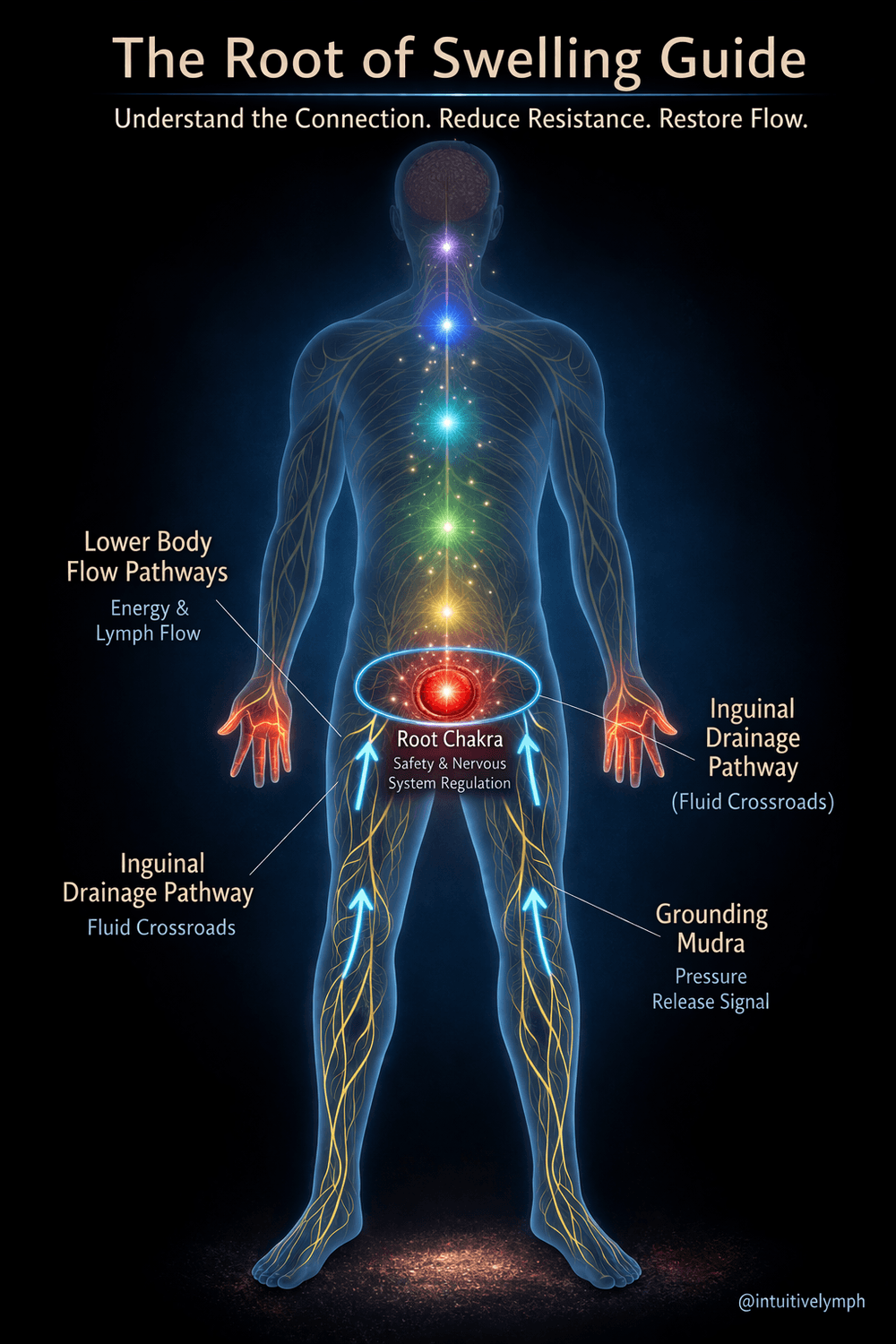
1. What is the Root Chakra?
The root chakra is often described as your body’s foundation.
It is associated with safety, grounding, stability and your connection to the earth, to your inner child, and your own security.
It is located around the base of the spine, the pelvic floor, and the lower body, including the hips, legs, and feet.
From a perceptual physiology lens, this is not just an abstract concept.
It overlaps directly with how safe your body feels, how much tension is held in the pelvis, and how easily the lower body can soften and allow movement.
When the body feels safe, tissues are more adaptable.
When the body feels guarded, tissues tend to tighten.
Imbalances often manifest as insecurity, difficulty feeling connected in your life and may relate as:
- sleeping problems
- fatigue
- problems with legs
- genitals
- swelling
- joint pain
- restless legs
- digestive problems
- hoarding
- fear
- anxiety
- poor boundaries
Cleansing and balancing the 7 major Chakras often begins with the Root Chakra, as it represents the foundation for your being. And it represents the critical foundation for your lymph system, with the connection to the deep trunks the cisterna chyli.
2. What are the Lower Meridians?
Meridians are traditionally described as pathways of flow throughout the body.
The lower body meridians (legs, pelvis, lower abdomen) are often associated with:
- grounding
- circulation
- stability
- energy returning upward toward the core
These pathways mirror patterns of movement, pressure, and sensation.
Your body has:
- fluid pathways (lymph vessels)
- nerve pathways in your peripheral nervous system
- fascial lines where connective tissue meets muscles, tendons, and skin
Meridians intersect your natural fluid pathways.
Meridians can be understood as:
the felt experience of these interconnected systems working together
When people say:
- “I feel flow moving up my leg”
- “I feel a catch in my hip”
They are often sensing pressure changes, tissue resistance and nervous system signaling.
And that resistance is not just about fluid itself. It often reflects what is happening in the surrounding tissue.
So… What exactly is fascia?
It’s basically the ‘glue’ that holds all of our structures together.
Fascia plays a role in how pressure is distributed and how easily fluid can move.
When this tissue is soft and adaptable, fluid can pass through more easily. When it becomes more tense or resistant, pressure builds and movement becomes more difficult.
Research supports this perspective. Fascia is now being understood not just as structural support, but as a responsive system that interacts with the nervous system and helps regulate how forces move through the body (Slater et al., 2024).
Holistic care holds space in our bodies and deserves a place in the discussion.
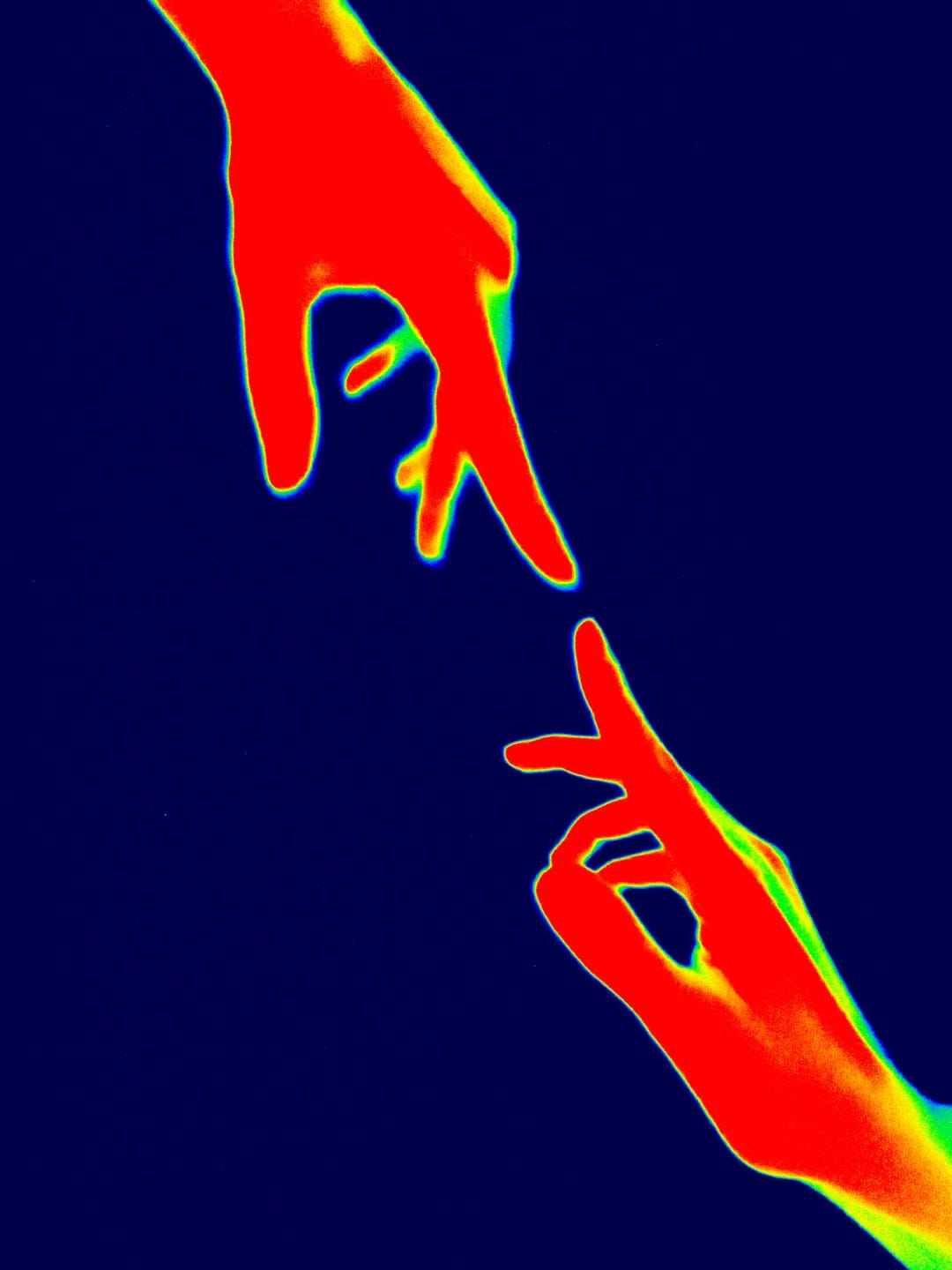
Photo by Margaret Kester on Unsplash
3. What are Mudras?
Mudras are specific hand positions used in meditation or stillness.
They may support:
- focused attention
- regulated breathing
- anchored awareness in the body
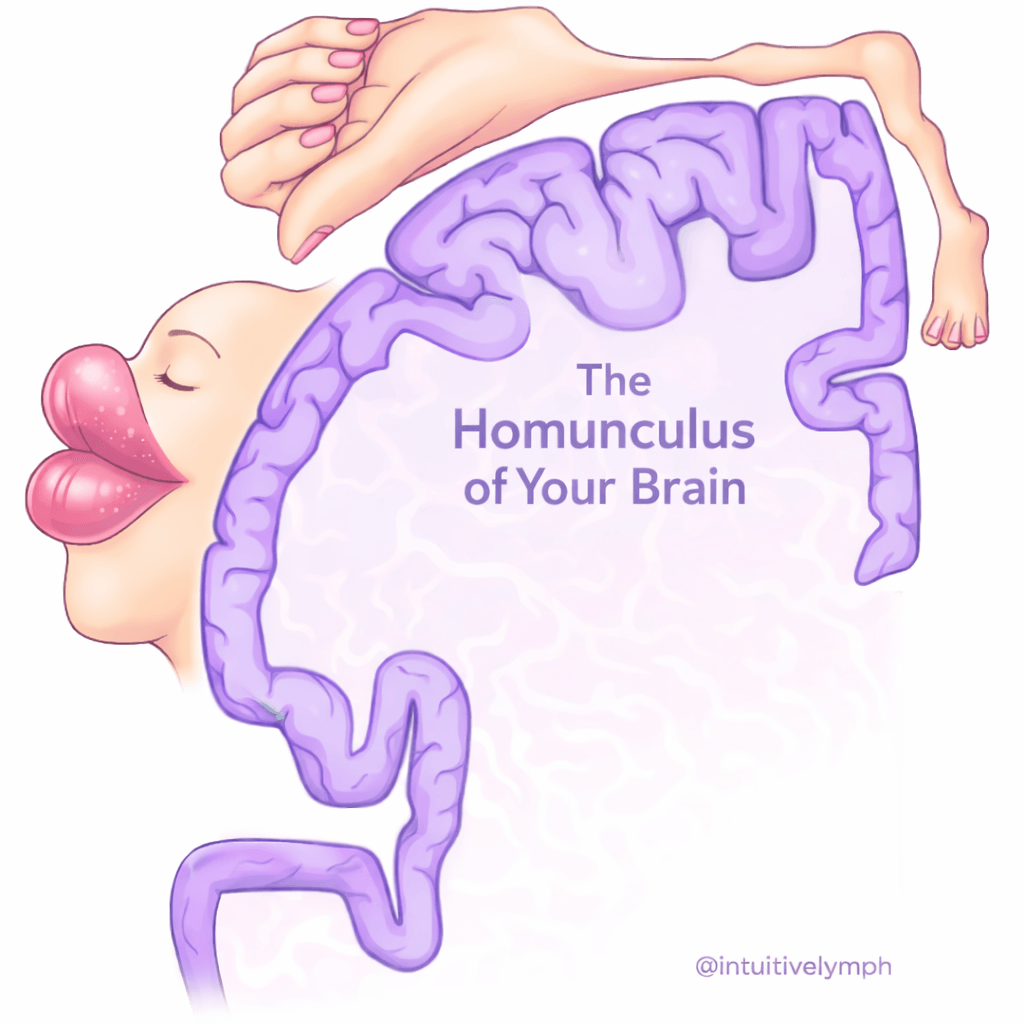
The Homunculus
Your hands have a large representation in the brain.
Changing a hand position can shift attention and nervous system tone.
Mudras give your brain a signal of intention and safety.
For example:
- palms down feels grounding
- palms up feels open
- hands resting gently feels relaxed
- hands fisted tight feels dense
- fingers touching brings focus and awareness
This matters because when attention changes, the nervous system shifts, and pressure patterns in the body can change.
If you want to feel this in your body, I created a short guided lymphatic meditation you can listen to here.
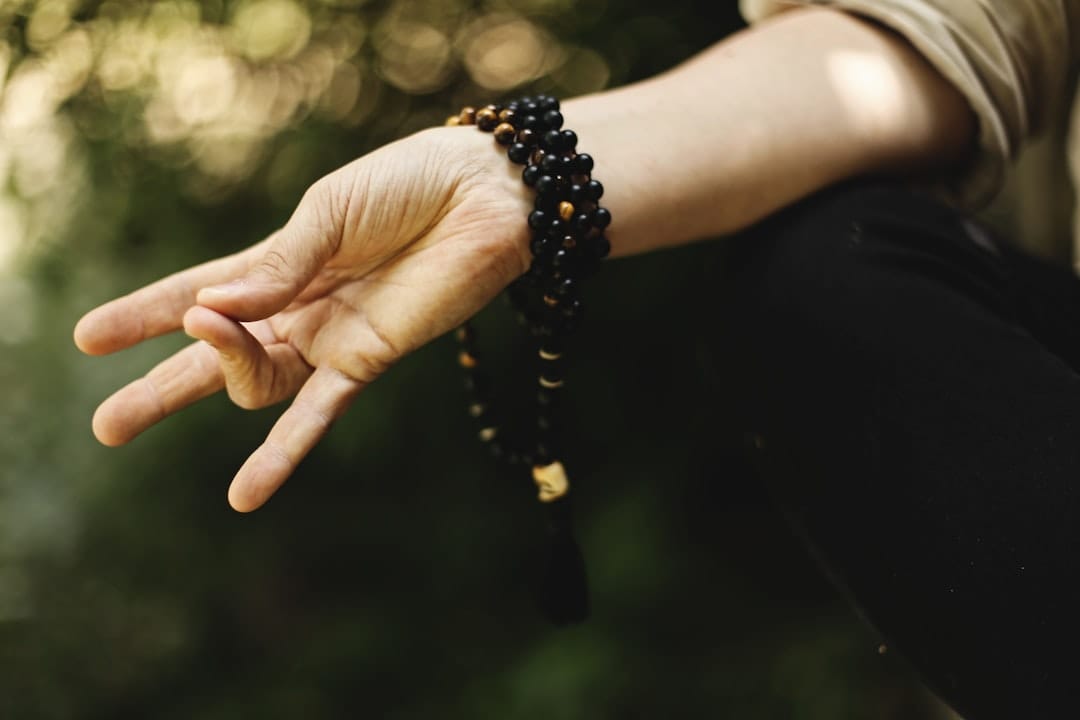
Photo by Ksenia Makagonova on Unsplash
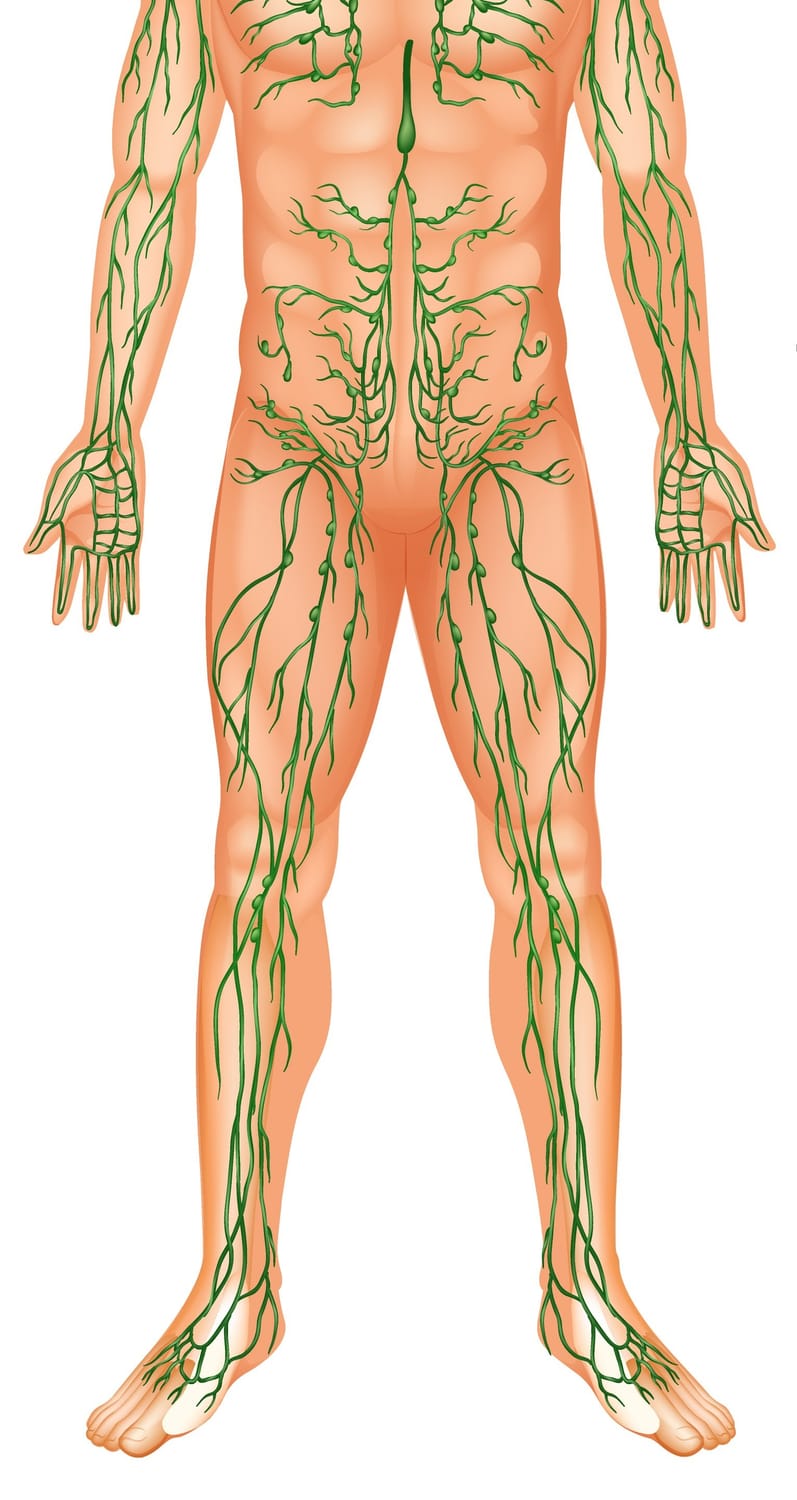
4. What is the lymph system and Inguinal Anastomoses?
The Lymphatic System
The lymphatic system is your body’s fluid movement and cleanup system.
It:
- collects excess fluid
- carries waste products
- returns fluid back into circulation
It does not have a pump.
It relies on:
- movement
- breathing
- muscle contraction
- pressure changes
Why Swelling Happens
Swelling develops when more fluid enters the tissue than the body can move out.
As internal pressure rises, fluid can slow down and collect.
A Simpler Way to Understand It
- Your body is always moving fluid
- When everything is working well, fluid flows
- When resistance builds, fluid lingers
Swelling improves when the body is supported, not pushed.
The inguinal region is a major drainage intersection.
If this area is tight or compressed, fluid from the legs can slow down and pool.
5. How These All Connect
The Root Chakra sets the tone
If your system feels unsafe, the body tightens.
The Meridians reflect flow
You may feel heaviness or blockage.
The Inguinal Anastomoses handle physical flow
Tension here slows movement.
Mudras influence the nervous system
They shift your state.
The Missing Link: Perception
- Perception influences tension
- Tension influences pressure
- Pressure influences flow
The Real Integration
“I reduce resistance so my body can move fluid.”
Practical Integration
- Ground with breath
- Notice your body
- Use light touch
- Position hands for safety
Final Thought
Your body is a coordinated system of pressure, perception, and nervous system response.
When those systems align, flow becomes easier.
Experience This in Your Body
You don’t need to force change.
You can begin by shifting the conditions in your body.
Continued Learning
Read: What Meditation Does for the Lymphatic System
Start here: The Swelldown Foundations Guide
Citations
Slater AM, Barclay SJ, Granfar RMS, Pratt RL. Fascia as a regulatory system in health and disease. Frontiers in Neurology. 2024.
How can I help?
Educational content only, not medical advice. All words are my own.
© 2026. All Rights Reserved

Created with ©systeme.io